

The Price of Promotion – What Does it Cost to Climb the Non-League Pyramid?

Updated: Sep 4

When Avro’s players walked off the pitch at Stalybridge Celtic in May, they had achieved what the club had spent an entire season chasing: promotion.
A 4-2 victory in the Northern Premier League West play-off secured Avro’s place at Step Three of the National League System for the first time in the club’s history, moving them another division closer to the professional game. Time will tell if they ever make it further, but it was a momentous occasion to be a part of. For the players, supporters and countless volunteers who had followed the club, it was the perfect ending.
But promotion does not simply mean changing a few logos and opponents on the calendar for the year ahead. Not only will the new season bring challenges in terms of stronger opposition, but it also comes with longer journeys and greater expectations. Away from the challenges on the pitch, clubs also have to ensure that the facilities and infrastructure surrounding them are capable of moving upwards.
Success doesn’t come for free in this sport.
Winning is just the beginning
The further a club climbs through the National League System, the greater the requirements for the football ground it calls home become. The FA operates a Stadium Accreditation system covering the different steps of the pyramid, with each step having to match the corresponding Grade requirements. These standards cover more than just the pitch itself.
Things like floodlights, covered accommodation, seating, hardstanding, dressing rooms, medical facilities and media provision can all form part of these specific requirements that clubs must be aware of and manage in case of a promotion. These rules have to exist for games to even take place, as bigger teams mean larger crowds that require grounds that are better equipped for spectators’ safety and enjoyment.

For an ambitious non-league club that wants to progress up the footballing ladder, it means that the club as a whole has to improve, not just the 11 players on the pitch. It creates an unusual situation where success can be monitored in more ways than just results. Football is not just the game on the pitch anymore, and everything around it plays a crucial role in how a club performs. Success could mean improving club and ground facilities so that, for a potential promotion, they have everything in place to sustain the level that the club has reached.
Growing with the team
In January 2021, Marine FC hosted Tottenham Hotspur in the third round of the FA Cup. The match was played behind closed doors because of the COVID-19 pandemic, but more than 32,000 virtual tickets were sold as supporters around the world backed the non-league side. The result was predictably one-sided, with Spurs winning 5-0, but simply hosting José Mourinho's side represented an enormous opportunity for Marine, who benefited hugely from the event.
“The Spurs game gave us the opportunity to reinvest that money in the club facilities,” Marine vice-chairman Dave McMillan told me.
“Putting a 3G pitch in, refurbishing the social club, and further ground improvements that we needed to do since we got promoted to National League North.”
Marine has since said that around £800,000 was invested into the club following that period, including the pitch and renovations to its bars and function rooms. This investment coincided with some extraordinary growth, as average attendances increased dramatically, going from around 350 to 1,400, while Marine achieved two promotions and reached National League North for the first time in the club’s history.
It showed how investment on and off the pitch can work together, ensuring that when success arrives on the football side, the infrastructure is capable of following it.
Where does the money come from?
Marine’s Tottenham tie represents the sort of financial opportunity most non-league clubs could never include in a business plan. More than £300,000 was raised through virtual ticket donations alone, while the wider cup run provided Marine with a level of national exposure that clubs of their size rarely receive. The game was broadcast live on BBC One, where millions could tune in to watch for free, even if they lost comprehensively in the end.
The benefits continued long after the fixture, with Marine later spending more than £500,000 installing its artificial pitch. Cup competitions can therefore offer something beyond the possibility of lifting a trophy. Prize money, gate receipts and national exposure can provide clubs with resources capable of changing their trajectory.
McMillan highlighted the financial significance when discussing Marine’s FA Trophy run last season.
“There’s a financial aspect, certainly in terms of prize money and gate shares,” he said.
“I think Spennymoor last season made in excess of 100k just on the final itself.”
For the overwhelming majority of clubs, however, there will be no big Premier League team arriving in the FA Cup and no enormous financial windfall waiting around the corner. Growth instead has to come through the less glamorous sources that keep these non-league clubs functioning every week.
More supporters can mean more income, which is why attracting attention online matters. Greater facilities can create new revenue streams, but somebody has to operate them. Promotion can increase interest in a club, but it can also increase the demands placed on players and volunteers who already fit football around the rest of their lives, as the higher a club climbs, the harder it is to juggle their part-time dreams with their full-time needs.
When the ground cannot follow
Infrastructure can eventually become more than an inconvenience. FA regulations require clubs to obtain the appropriate stadium accreditation for their level. Failure to achieve the necessary standard can affect whether a club is eligible for promotion or even able to remain at its existing step.
The football pyramid therefore contains an unavoidable tension. Clubs are encouraged to dream about climbing it, but if that ambition cannot be supported sustainably by the club's finances and facilities, progression becomes considerably more complicated.
Marine have already had to confront this issue themselves, with plans in place to develop a new 5,000-capacity stadium and community facility at Edge Lane. Their current Rossett Park home has developed alongside the club, but further expansion there has been deemed unviable, meaning continued progression would require something more substantial. This proposed development would include a 3G pitch, a community hub, classrooms, a gym and health and wellbeing facilities.

But there is perhaps no greater demonstration of the financial pressures created by progression than Hashtag United. After three promotions helped take the club from the tenth tier to Step Three, Hashtag took the extraordinary decision in March 2026 to request voluntary relegation regardless of where they finished at the end of the season.
The decision was not initially driven by results. The club described competing at Step Three as financially “unsustainable”, instead believing that dropping back to Step Four would create significant savings and allow money to be redirected towards its long-term future, including investment in a new ground.
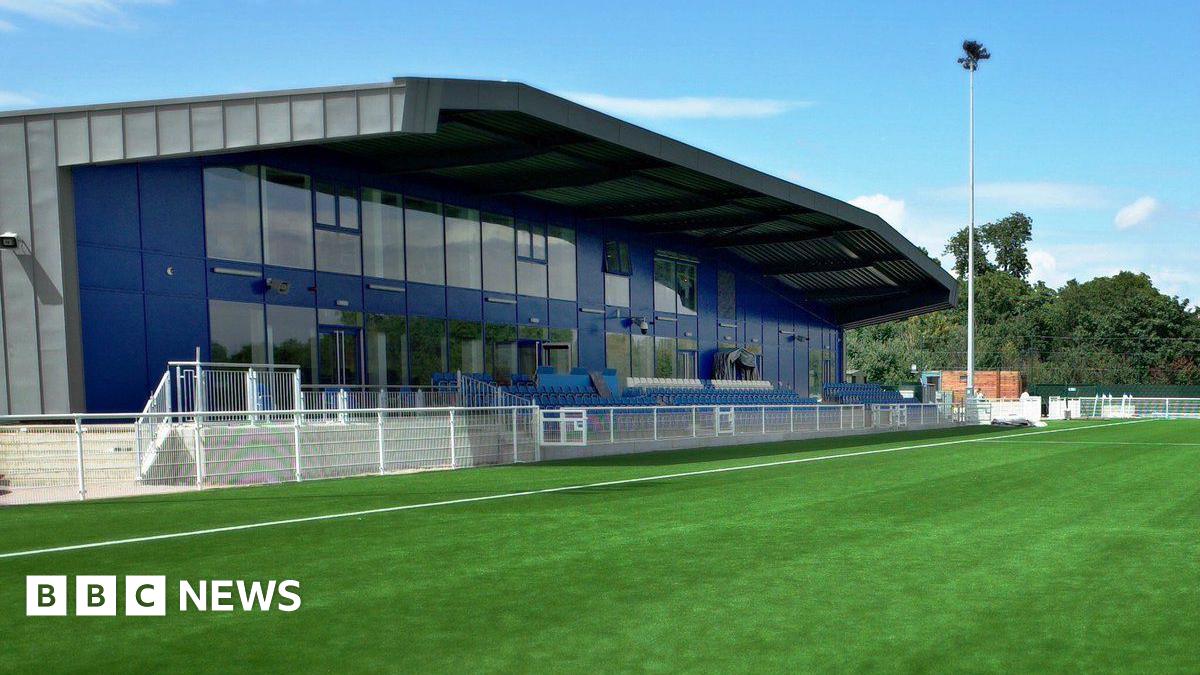
Hashtag eventually finished in the relegation zone anyway, making the requested demotion unnecessary, but its intentions provided a remarkable example of the dilemma facing ambitious non-league clubs, raising the question of what happens when a club's ambitions begin to outrun its ability to sustain them. For most teams, promotion is positive, but Hashtag had reached a point where moving backwards was considered the more sustainable way of operating the club.
The work begins after promotion
For Avro, those demands are no longer hypothetical. Promotion last season took the club to Step Three for the first time in its history, an extraordinary rise for a side that was still competing at Step Seven as recently as 2018.

The celebrations following the play-off final therefore quickly gave way to preparations for an entirely new level of football. In the programme for Avro's first Step Three fixture against Quorn, the club acknowledged that “a lot of work and maintenance” had taken place at the Vestacare Stadium during the summer.
Much of that work again fell upon the same kind of people who have powered Avro's rise away from the pitch. Committee member Lynsey Mellor organised another volunteer day in July, while chairman Rob Fuller and vice-chairman Chris Kennedy were specifically thanked for their hands-on work throughout the close season.

It creates an interesting consequence of success. Promotion might be earned by the players over 90 minutes, but preparing a club for what comes afterwards can involve weeks of work from people who never kick a ball. Eight years ago, Avro were a Step Seven club. Now they are competing at the highest level in their history. Every step upwards has required the operation surrounding the first team to grow with it.
What is success worth?
It would be easy to look at the financial demands of progressing up the football ladder and decide that for every success comes a boatload of problems that need solving to get there, and that is not worth the hassle. That could not be further from the truth.
Clubs want to have these problems, because the game is what makes it all worth it. No club would enter a competition if they didn’t want to win it, no matter how big or small their chances are.
For supporters, players and volunteers, these moments are the reward for everything surrounding them: the long, harsh evenings spent training after work, the unpaid hours preparing a ground ready for matchday, the multiple journeys across the country and the countless Saturday afternoons in every weather condition braving it out for three points.
McMillan understood that when Marine found themselves within touching distance of Wembley during their FA Trophy run.
“But even if you didn’t make a penny out of it, for a club of any size to get to Wembley is a once-in-a-generation opportunity really,” he said.
The finances matter because without them the dream cannot remain sustainable. Facilities matter because clubs need somewhere capable of hosting the level they aspire to reach.
Volunteers, players, media teams and supporters matter because without them there is very little club left to progress. But none of those realities removes the reason people become involved and fall in love with the sport of football in the first place.
Success may create challenges, but that is the whole point.
“But it’s all about allowing the fans to dream, isn’t it?” McMillan said. “You want your team to be winning trophies and get promotions.”


Comments