

Clocking Off Before Kicking Off – The Double Life of the Semi-Professional Footballer

Updated: Sep 4
Transfer deadline day has just recently come and gone. It is arguably one of the most chaotic, frantic and exhausting days to be part of a football club. Whether you are a player, fan or at the helm of a transfer to or from your club, it is a massive day on the football calendar. Personnel scramble for phone numbers, recruitment teams work tirelessly to get deals done, whilst we supporters have the agonising task of waiting for news to arrive.
The good news for most people involved is that they can dedicate their entire day purely to these negotiations, no matter how big or small. It is their job, their source of income. So what happens when it isn't? What happens when you are having to scramble around whilst simultaneously doing another task on the side?
Andy Whing experienced just that. The former Coventry City and Brighton & Hove Albion defender was managing National League North side Banbury United when, on deadline day in 2023, he was trying to sign players whilst simultaneously working his full-time job in a warehouse.
“I was wrapping sofas and trying to sign players at the same time; it’s beyond impossible to be honest!” Whing said. Once the working day was finished, there was little opportunity to switch off, as Whing would return home, see his wife and children, get changed and go straight back out again for training.
Whing’s experience highlights an extreme example of the harsh reality of juggling two jobs at once, especially ones that you are highly responsible for, but the circumstances behind it are commonplace throughout semi-professional football. For thousands of people operating further down the English pyramid, football is not necessarily the job. It is another job that somehow has to fit around everything else.
A compact working week
The world of professional football has evolved enormously in terms of maximising player performance. A lot of time during a typical week is spent recovering from the game before, then proceeding to plan ahead to the upcoming game. Training, nutrition, recovery, sleep and injury prevention are all closely monitored by teams of staff, analysing and structuring almost every aspect of a player’s week to prepare their body for the upcoming match.
Semi-professional footballers don’t have that luxury. Training sessions usually take place during evenings because players and staff have spent their day elsewhere, while midweek fixtures can mean travelling after completing a shift at work. There are still matches to prepare for and bodies to recover, but considerably fewer hours in which to do it.

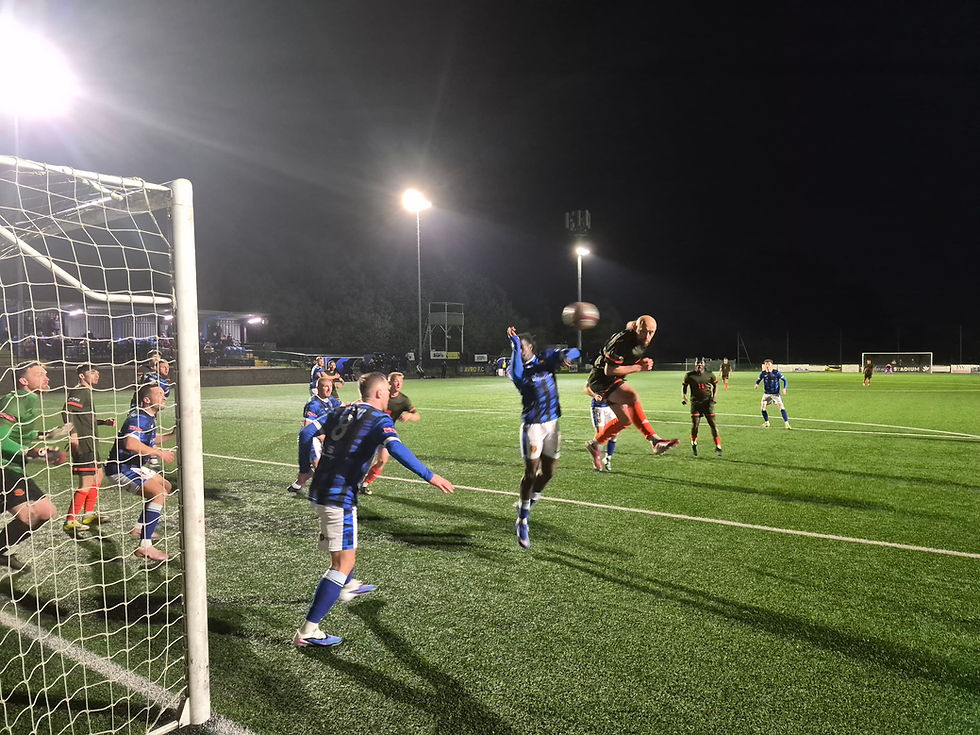
Players do not always have the luxury of adequate recovery time, particularly after long journeys and late finishes when work is waiting the following morning. I experienced that first-hand following Avro's dramatic NPL West play-off semi-final against Lower Breck in April 2026. After a 93rd-minute equaliser had taken the game to extra time, Avro eventually recovered from falling behind to draw 2-2 before winning 4-3 on penalties.
When I spoke to striker Kyle Hawley after the match, the celebrations were already having to compete with the reality of his working life. Hawley told me he had to be awake for work in around five hours, cutting short his opportunity to celebrate reaching the play-off final. He joked about having to keep his celebrations quiet with his neighbours already asleep and, while a victory in normal time might have earned him considerably more sleep, progressing to the final made the sacrifice worthwhile.

Academic research describes athletes combining high-level sport with employment or education as having a ‘dual career’. A 2026 systematic review examining research into athletes who work alongside sport identified financial need as the most frequently reported reason for doing so. Conflicting schedules and physical or mental tiredness from combining the two were among the most common barriers.
The research also identified planning and prioritisation as important skills for working athletes, while supportive and flexible employers repeatedly appeared as one of the most significant external resources available to them. For a semi-professional footballer, therefore, choosing what to do between matches can become almost as important as what happens during them.
Former Trafford player Andy Lundy experienced that balance through two different careers. During his first spell with the Greater Manchester club, Lundy worked full-time as a football coach in primary schools across the North West. By his second, he had retrained as a driving instructor.
Both careers offered something particularly valuable to a non-league footballer: flexibility. Lundy explained that the nature of the two jobs allowed him to train and play alongside work and, with no children at the time, he was also able to dedicate significant time towards competing at that level.
Not every player has this luxury. Some jobs cannot simply be moved to accommodate training sessions and games. Some employers do not care about a Tuesday night fixture, and annual leave can become something used not for a holiday, but to pursue what ultimately remains a passion for the player.
At Avro, there is a particularly simple example of what happens when the two worlds collide.
When work wins
On 13 September 2022, Avro travelled to Burscough looking to respond to a defeat against Congleton Town. Manager Alex Frost made four changes to his starting XI, but one regular member of the squad was nowhere to be seen.
Kyle Jacobs wasn't injured or suspended, but instead, he was working.
Avro's own match report listed Jacobs as unavailable because of work commitments, forcing Jack Worrall to move from his customary right-back position into central midfield.
Avro eventually won the game 3-1 courtesy of three goals in the final 15 minutes, but Jacobs' absence represents something that would be almost unimaginable higher up the football pyramid. Imagine Everton announcing that one of their midfielders was unavailable for Saturday's Premier League fixture because they couldn't get the shift off.
At this level, however, football cannot always win the argument. For all the commitment required to play semi-professionally, another occupation may still provide the player's primary livelihood. Training sessions and fixtures have to be fitted around that reality, and sometimes the two simply cannot coexist.
Whing described similarly difficult circumstances after Banbury's promotion increased the amount of travelling required. Four or five hours on a coach on Saturday could be followed by another lengthy journey on Tuesday night before work again on Wednesday morning.
It is why the word ‘part-time’ can sometimes feel misleading. The football may technically be part-time, but the hours surrounding it can make the commitment feel anything but.
When sport isn’t the only career
This balancing act is something plenty of people have to manage in their daily lives, and semi-professional athletes outside football are no different.
During my time with Widnes Vikings, I encountered perhaps one of the more unusual examples of a semi-professional athlete’s working life. Widnes winger Ryan Ince spends his days away from rugby league as a beekeeper. What initially began through somebody at his previous job has developed into a full-time business, with Ince explaining that he now has around 150 hives producing honey, which he sells himself, online and through local businesses.
The career became particularly important after he moved away from full-time rugby. Ince initially completed an apprenticeship after leaving the full-time game but admitted the work was not something he particularly enjoyed. By the time he finished, however, another opportunity had quite literally been growing around him.
“I had about 60 hives at the time, and I thought, why not? I’ll just full-time the bees,” Ince said.
His working day now bears little resemblance to that of most professional sportspeople, especially around the busy spring and summer months. He has to prevent colonies from swarming, maintain his hives, extract and jar honey and manage the commercial side of the business.
“I didn’t really enjoy my old job that I had,” he said. “Now I do this all the time and I’m quite happy.”
Despite being in the world of rugby league, Ince's situation demonstrates the same broader challenge faced by athletes throughout semi-professional sport. Training sessions, matches, media duties and other sporting commitments have to coexist with the occupation providing another source of income and a life outside the game.
Developing a different career path can offer more than simply another way of making money. It can provide independence, another identity and, perhaps most importantly, an avenue for the eventual moment when an athlete has to hang up their boots for good.
The double cost of the double career
These things all come with a price to pay, however, as maintaining both requires considerable effort.
The 2026 review of research into working athletes found that physical attendance at both sport and employment was among the most frequently identified demands, alongside meeting performance standards in one or both environments. Conflicting schedules repeatedly appeared as a barrier, as did the physical and mental tiredness generated by combining sport and work.
Those findings are particularly relevant to football. A semi-professional player cannot simply arrive at work exhausted every Monday because they played 90 minutes the previous afternoon, just as their manager is unlikely to accept consistently poor performances because their player has endured a difficult week at work.
Injury creates a different complication altogether. Rehabilitation is part of a professional footballer’s occupation. Even during an injury spell, they are still paid, offered first-class treatment and rehabilitation to get them back fit as soon as possible. The situation can be very different for those who have other livelihoods away from the game. For semi-professionals who rely on being physically active and capable for their job, an injury whilst playing can affect both careers and create financial worries if they are unable to perform their job.
Fatigue can create another difficulty. After combining employment, training and matches, opportunities for adequate rest and recovery can become limited. Time is not something handed to them, either. Evening training, midweek fixtures and Saturday matches coexist with employment, relationships, children and everything else that fills an ordinary week. Professional footballers undoubtedly have commitments away from the game themselves, but their principal occupation remains football.

But their full-time commitment relies on their football, as they wouldn’t have these opportunities without it. For semi-professionals, a supposedly part-time commitment can still demand huge amounts of time and effort, making flexibility particularly valuable. The systematic review found supportive and flexible employers were among the most frequently reported resources available to working athletes. Work that can accommodate football offers a very different dual career from one governed by rigid and inflexible shifts and no opportunities to change.
The relationship between sport and work is therefore pivotal to semi-professionals' lives and careers. The two have to coexist, and it is the player's task to make that relationship as seamless as possible, preventing one from interfering with the other despite the sacrifices required.
From fast food to the Premier League
For a small number of players, however, there remains another reason to keep balancing the two: the possibility that one day they might not have to.
Former Everton striker Beto knows that better than most. Long before leading the line in the Premier League, the Guinea-Bissau international was attempting to make his way through Portuguese football whilst simultaneously working in a fast-food restaurant. Everton have since described his journey as one from balancing part-time football and fast-food work to wearing the club's number nine shirt.

It is an extraordinary trajectory and one which makes Beto an exception rather than the rule. Thousands of semi-professional footballers will never receive the opportunity to make football their only occupation, regardless of their commitment to the game. Beto has spoken about the hurdles that could have prevented him reaching the Premier League and the mentality required to keep progressing. His journey eventually took him through Portuguese football to Udinese in Serie A before Everton brought him to England in 2023.
For a player leaving work and heading straight to training tonight, stories like Beto's provide evidence, however unlikely, that the gap between the two worlds is still possible to cross, however unlikely that journey may be. The person serving food, driving a van, teaching a class or working in a warehouse today could still be a footballer at the same time.
Why do it?
It is understandable to ask why players continue to put so much time and effort into something unlikely to make them rich.
Money will inevitably form part of the answer. At a time when living costs remain a concern for households across the country, even modest football earnings can provide tangible benefits alongside another salary. For others, the possibility of progression remains alive.
But progression cannot explain everybody. Most semi-professional players will never make it to the Premier League or even the EFL. Some careers will remain within the lower tiers, where football is required to coexist with everything else. Enjoyment, competition, identity, teammates and a simple love of playing the game therefore become just as important. There can also be advantages to developing a life outside sport. The 2026 systematic review found that working alongside an athletic career could assist the eventual transition away from sport, with greater employment experience potentially providing more sustainable opportunities afterwards.
One career does not necessarily have to wait for another to finish, and examples like Ryan Ince demonstrate why. It is easy to look at semi-professional football and focus on what separates it from the professional game. There are smaller grounds, fewer facilities and smaller wages, but perhaps the biggest difference of all is time. Football is not the working day; it has to work around it.


Comments